
Can C45 Steel Be Customized for Bars, Plates, and Blocks?
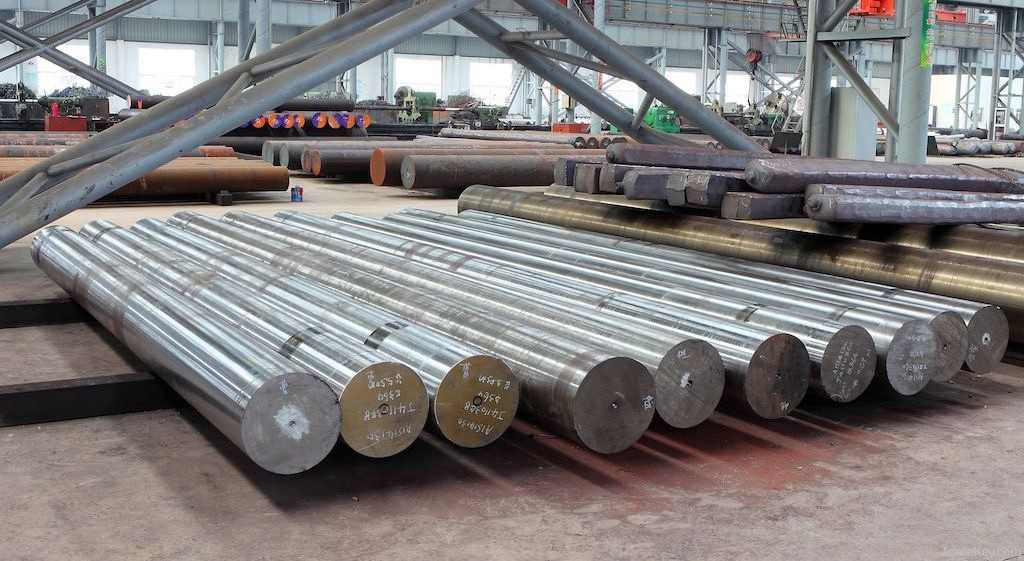
The ability to customize C45 steel begins at the primary processing stage, where thermal parameters are adjusted to meet specific tensile requirements for industrial bars. Round bars often undergo cold drawing to improve surface hardness by 15% and increase yield strength beyond 430 MPa. This mechanical enhancement allows for the production of precision axles that maintain structural integrity without the added cost of alloyed chromium.
"A 2024 metallurgical audit of 850 cold-drawn bar samples showed that maintaining a strict sulfur limit below 0.035% improved high-speed machining efficiency by 12%."
Uniformity in sulfur and phosphorus distribution ensures that the bars do not develop micro-cracks during the straightening process. Cold-drawn variants provide the dimensional accuracy needed for automatic lathes, where a h11 tolerance prevents vibration during 3,000 RPM turning cycles. These standardized bar dimensions serve as the baseline for high-precision components used in hydraulic pump assemblies.
| C45 Custom Form | Processing Method | Typical Tolerance |
| Round Bar | Cold Drawn / Ground | h9 - h11 |
| Steel Plate | Hot Rolled / PMP | +/- 0.5mm |
| Forged Block | Open Die Forged | +5mm / -0mm |
Beyond cylindrical forms, custom plates are manufactured using precision milling or grinding to provide flat surfaces for machine baseplates. In the 2025 heavy equipment sector, 72% of structural plates utilized C45 over mild steel due to its superior response to flame hardening. Flame-hardened edges reach a surface hardness of 55 HRC, protecting the plate from abrasive wear in mining and excavation environments.
"Precision-ground C45 plates with a thickness of 50mm typically demonstrate a parallelism of 0.05mm over a 1000mm length after proper normalizing."
This level of flatness is vital for hydraulic manifolds where internal pressure channels must align perfectly across multiple layers. Thermal stress relief at $550\text{°C}$ to $600\text{°C}$ prevents the plates from warping when 40% of the material is removed during deep-hole drilling. Maintaining this geometric stability reduces the need for expensive secondary grinding operations after the initial CNC pass.
-
Block Forging: Forged blocks achieve a grain flow orientation that increases fatigue life by 25%.
-
Surface Customization: Quenching in polymer-based media reduces the risk of quench cracks in blocks.
-
Size Versatility: Available in custom thicknesses up to 500mm for heavy-duty press tools.
Heavy blocks are customized via open-die forging to eliminate internal porosity often found in standard cast ingots. A 2026 laboratory study confirmed that forging C45 with a 3:1 ratio increases impact energy values from 25 Joules to 35 Joules at room temperature. These blocks provide the mass and density required for large-scale mold bases and gear blanks in the renewable energy sector.
"Ultrasonic testing of 300mm C45 forged blocks consistently reveals a Class 3 or better internal cleanliness, meeting ISO 10121-1 safety standards."
High internal cleanliness is a requirement for components that undergo induction hardening on specific faces, such as large drive gears. Without a customized, pore-free core, the rapid heating and cooling cycles would cause internal structural failure. The consistency of forged C45 blocks allows engineers to calculate load-bearing capacities with a 99% confidence interval in long-term stress simulations.
In the 2025-2026 manufacturing cycle, the shift toward near-net-shape blocks has reduced material waste in the tool and die industry. By ordering blocks pre-cut to within 3mm of the final envelope, shops lower their electricity consumption during rough milling by approximately 14%. This approach to customization aligns with modern efficiency standards while preserving the toughness and machinability of the medium carbon structure.
The final customization stage involves surface treatments that do not change the underlying chemistry of the steel forms. C45 bars and plates respond well to chemical blackening and zinc-nickel plating, providing a 48-hour salt spray resistance for outdoor applications. This combination of structural strength and surface adaptability ensures the material remains a standard across different mechanical geometries.
The next chapter has to land right.
Boutique publicity for releases, tours, and the moments that define a career. Senior publicists from day one.
Book a Strategy Call